

PAGE
TWO
St.
Petersburg - Andrew, Jacqui, her Mum and friends - 2014
And so on Day Six of the Cruise I arrived at the City I’d
had at the top of my “must see” list for many years
– St. Petersburg – for a
two-day stop over. Because of Russian visa issues it was necessary to
book an
excursion for whenever you wanted to go ashore. So we booked two
– the
Panoramic Tour and St. Peter & Paul Fortress on Day One, and a
St.
Petersburg Cathedrals Tour on Day Two.
For
once, on our arrival in St. Petersburg, it wasn’t
actually raining – just rather overcast and grey. We went
through Russian
customs without any hitches and I got a nice new stamp in my passport
(hadn’t
had one of those in a while!). Then we joined our bus for the long
journey into
the City Centre.
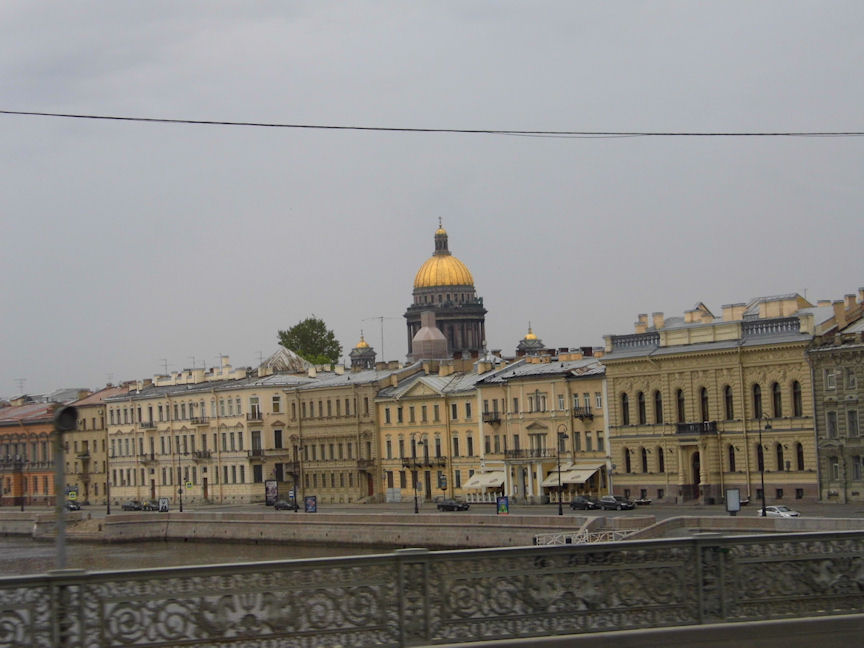
View of St. Petersburg
The
first part of the journey goes through an area that is
currently being massively built up around the new Cruise Terminal that
has only
recently opened. Once complete this area is going to be a huge complex
of shops
and housing, but at the moment is largely building site.
The
bus first stopped at St.
Isaac’s Cathedral
– the third
largest domed church in the world after St.
Peter’s
in Rome and St.
Paul’s in
London. We would go inside the Cathedral tomorrow, but for now I put my
first
steps onto Russian soil since my single day in Vyborg
in 1999.

Andrew outside St. Isaac's Cathedral, St. Petersburg
The
church is massive and monumental and from the outside a
bit forbidding and, dare I say it, almost dull. It’s largely
grey and brown –
if it wasn’t for that massive golden dome it would be one of
the less
attractive old buildings of the City. All the more surprising then when
we went
into it on Day Two … but I’m getting ahead of
myself.

St. Isaac's Cathedral, St. Petersburg
After
the brief stop in the square outside St. Isaac’s we
were off again passing by a series of fantastic vistas and amazing
pastel
shaded architecture; including our first views of the Hermitage/Winter
Palace.

The Admiralty, St. Petersburg

Academy of Sciences, St. Petersburg
Near
the Hermitage we crossed the Neva River to Vasilyevsky
Island. The island meets at the confluence of the Bol’shaya
Neva and Malaya
Neva where the two branches join to form the main river. Here is the
Spit of
Vasilyevsky Island – one of the landmark places to see the
City.
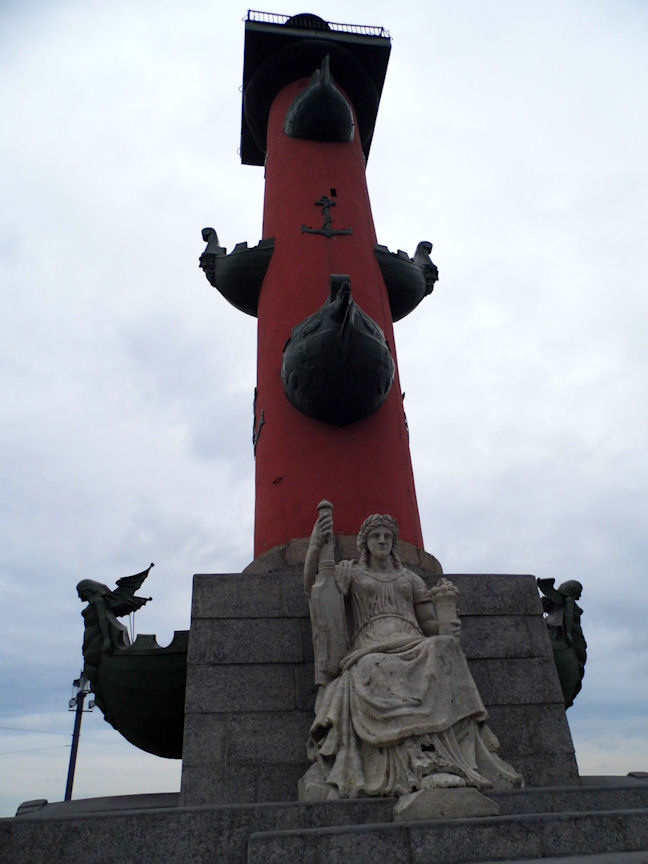
Rostral Column on the Spit of Vasilyevsky Island, St. Petersburg
At
the Spit – or Strelka – there are two rostral
columns,
once used as lighthouses, which define a small panoramic park. From
here you
can see all of St. Petersburg’s historic heart spread out
before you.

Peter and Paul Fortress, St. Petersburg
To
one side is the Fortress
of Peter and Paul, where
Peter the Great founded the City in 1703, in the centre of which stands
the
massive golden spire of the St.
Peter and St.
Paul Cathedral
where almost all
of the Russian Emperors from Peter the Great onwards lie entombed.
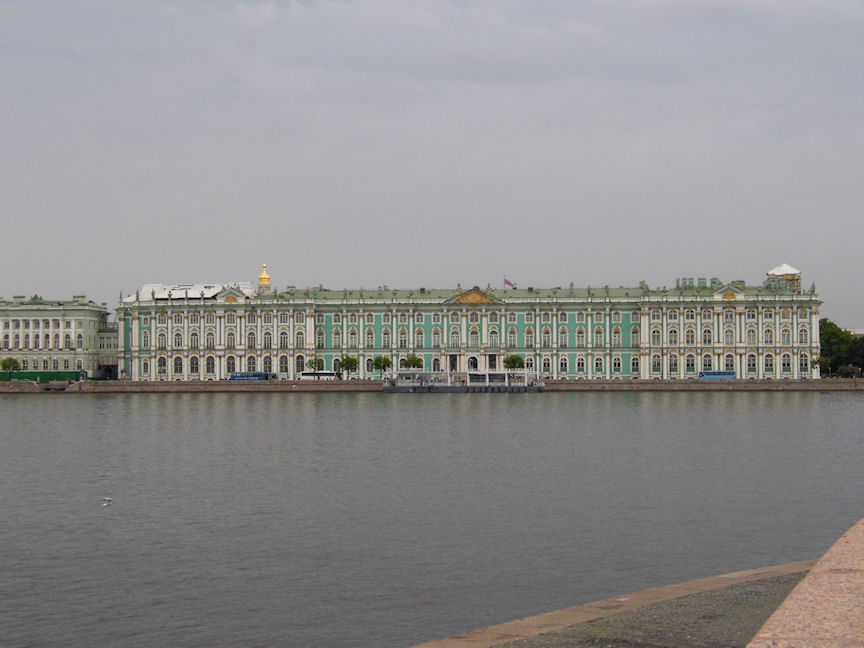
The Winter Palace/Hermitage from across the Neva, St. Petersburg
Looking
across the wider Bol’shaya Neva you get a stunning
view of the Hermitage and all the buildings which stand alongside it.
This is
one of those views of St. Petersburg that you see everywhere and it is
truly
wonderful. It was a shame that our stop at the Strelka was so short as
I would
love to have had more time to absorb this view in all its finest
details.

View of St. Petersburg
I
stayed as long as I could looking out across the Neva and
then I became aware that our bus was probably on its way so a short
dash back
across the park to the bus became required.
Once
back on board it was only a short trip to the main
event of this tour, a walk around the Peter
and Paul Fortress.
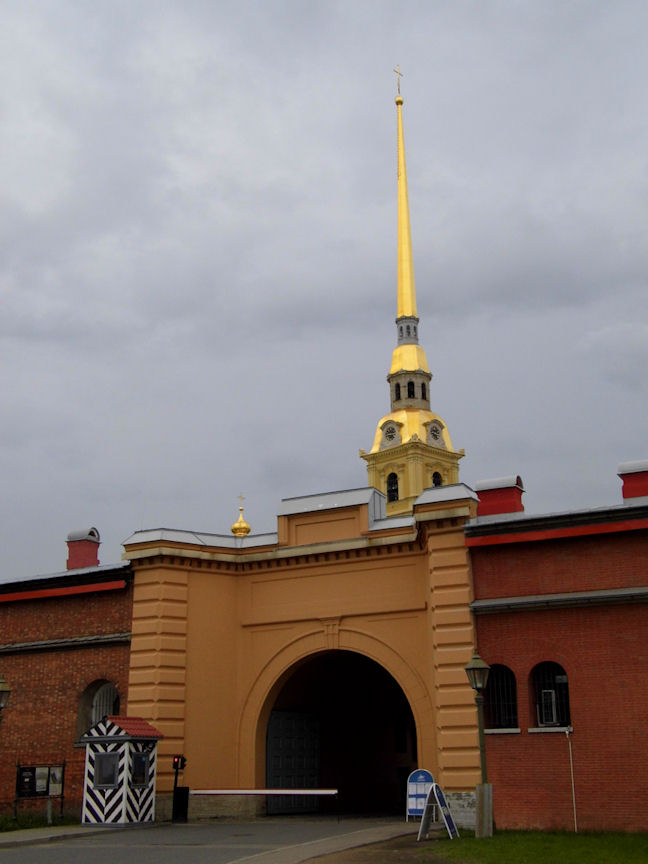
Entrace to the Peter and Paul Fortress, St. Petersburg
This
is where Peter the Great first decided to found the
City which he would call St. Petersburg. There was a small Finnish
settlement
here and the remnants of a Swedish fortification which
Peter’s forces had
recently taken for his new Russian Empire. Peter required an outlet to
the sea
more useful than ice-bound Arkhangelsk and he was also keen to have
Russian
considered more European. This little island – then called
Hare Island – was
his chosen spot.

Hare Statue in Peter and Paul Fortress, St. Petersburg
Work
began immediately and soon the City began to grow into
the magnificent reflection of Russian power and wealth that we know it
as
today. Peter – along with almost all his successors
– is buried within the
walls of his Fortress in the St.
Peter and St.
Paul Cathedral,
a massive
edifice of gold and yellow stucco that dominates the skyline of the
City even
today thanks to a rule stopping tall buildings in the City centre.

St. Peter and St. Paul Cathedral, St. Petersburg
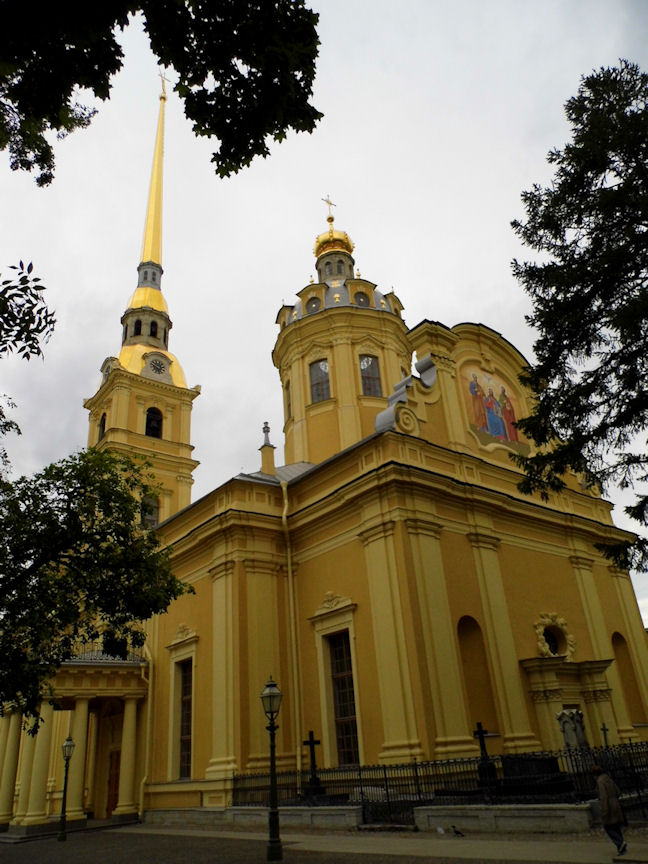
Another view of St. Peter and St. Paul Cathedral, St. Petersburg
The
tour continued to take us around the interior of the
Fortress.

Andrew and Jacqui in St. Petersburg
After
a while we emerged out onto the Neva Bank for some
more stunning views out over the City and you began to see the
reasoning behind
citing the Fortress here.

View from Peter and Paul Fortress, St. Petersburg

Looking towards the Winter Palace, St. Petersburg
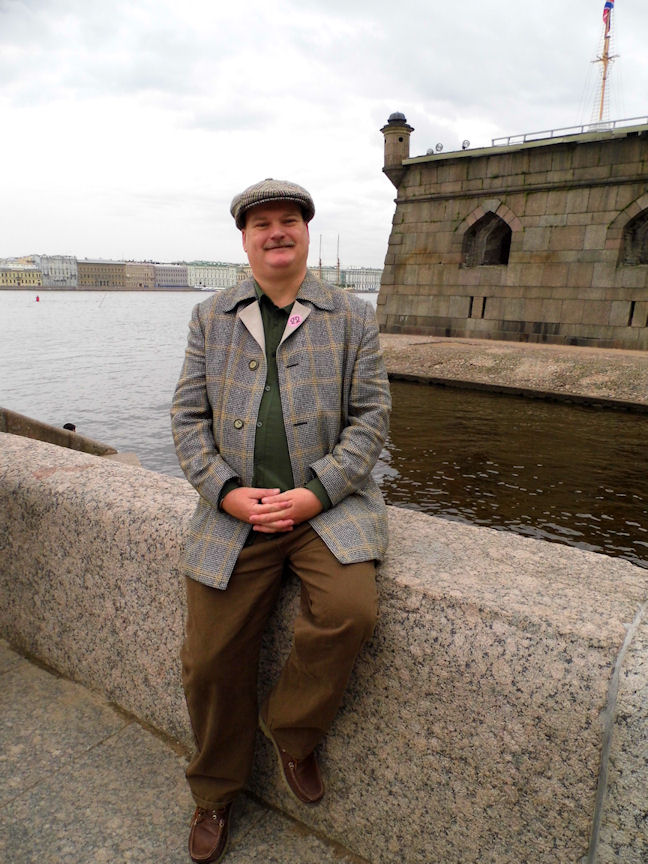
Andrew in the Peter and Paul Fortress, St. Petersburg
Despite
the strategic sense of building St. Petersburg here
the construction of the City was one which was fraught with problems.
The land
was swampy, the marshes unhealthy, thousands are thought to have
perished. But
Peter the Great was a typical Russian leader and would not let anything
like
that get in his way!
After
this stop it was back to walking through the Fortress
to where our coach would be meeting us. Another of my ambitions had
been met,
I’d finally walked through the Fortress which had been
haunting my travel plans
for a decade.
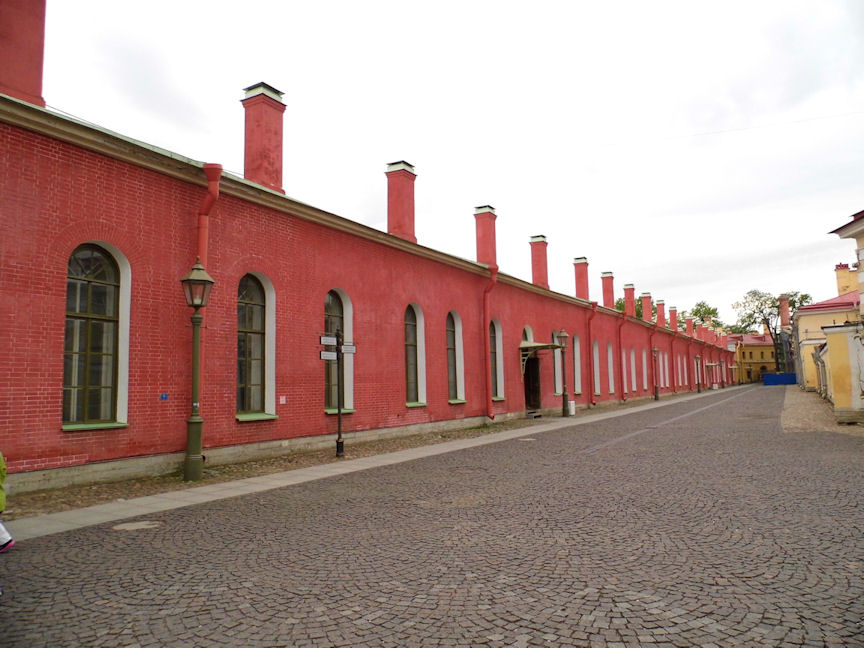
Inside the Peter and Paul Fortress, St. Petersburg
After
our sojourn in the place of the City’s founding we
then had our comfort break and souvenir stop. This was at the wonderous
Bazaar
souvenir shop on Petrovskaia
Naberezhnaia. The shop is massive and half-filled with wonderful amber
jewellery
and a range of matryoshka dolls that was bewildering.
Outside
free
samples of Russian vodka helped beat the cold away.
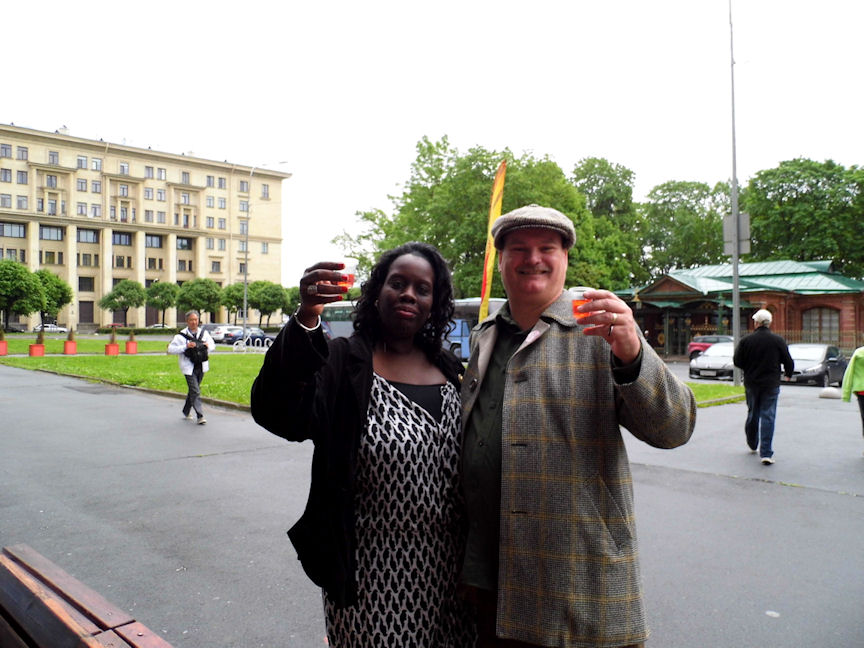
Cheers!
Oddly
enough,
completely unmentioned even by our guide, just across from the shop is
the
Cabin of Peter the Great. His little log cabin – built in
1703 near the Winter
Palace and transposed here in 1711. Peter himself had it encased in a
little
wooden building in 1723 and it was the first Museum in Leningrad (as it
then
was) to be re-opened after the Siege in 1944. I thought it looked like
an
interesting building and so I photographed it – I only
learned of its
significance when I got home.

Peter the Great's Cabin, St. Petersburg
This
day of
intensive and extensive sight-seeing continued with a brief stop at the
Cruiser
Aurora. In itself just a medium sized grey battleship, but historically
of
vital importance. It was from this ship that a gun was fired which
signalled
the beginning of the 1917 Russian Revolution. So here, in the
birthplace of
Imperial Russia, stands the birthplace of the Soviet Union.
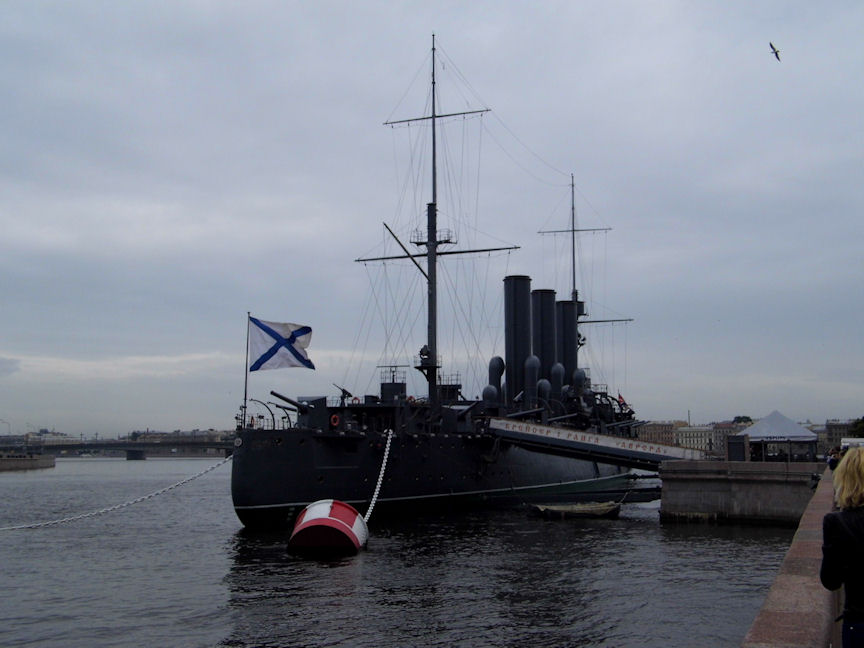
The Cruiser Aurora, St. Petersburg
After
briefly
passing the Mikhailovsky
Castle and the Field of Mars we
continued onwards.
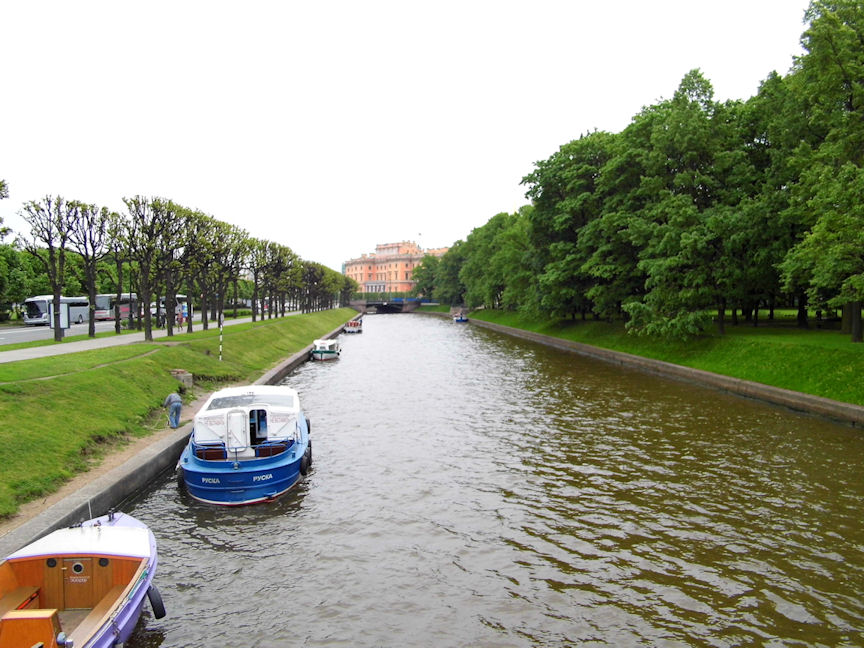
ooking towards the Mikhailovsky Castle, St. Petersburg
It
felt like we
had already seen so many of the landmarks of St. Petersburg, but our
Panoramic
Tour had one more major sight for us. The ultimate sight of St.
Petersburg, in
fact, the amazing, multi-coloured, multi-domed Cathedral
on the Spilled Blood.

Cathedral on the Spilled Blood, St. Petersburg
This
Cathedral – built between 1881 and 1907 in
spectacularly Russian style – is on the site of the
assassination of Emperor
Alexander II; one of the few liberal Russian Emperors. He was blown up
by a
saboteur’s bomb which removed his legs as he left his
carriage. The spot was
then venerated and orders for the construction of the Church were given.

Another view of the Cathedral on the Spilled Blood, St. Petersburg
Like
St. Isaac’s Cathedral, we would visit the interior
tomorrow. But for now we contented ourselves with the view of elaborate
domes,
mosaic frescos and golden cupolas. It’s a dazzling thing.
After
the Cathedral on the Spilled Blood everything else
could only be an anti-climax, so the bus took us along part of Nevsky
Prospekt
– the main shopping street of St. Petersburg –
where we surprised to see Prada,
Louis Vuitton and all the other top end stores you’d more
expect to come across
on Fifth Avenue.
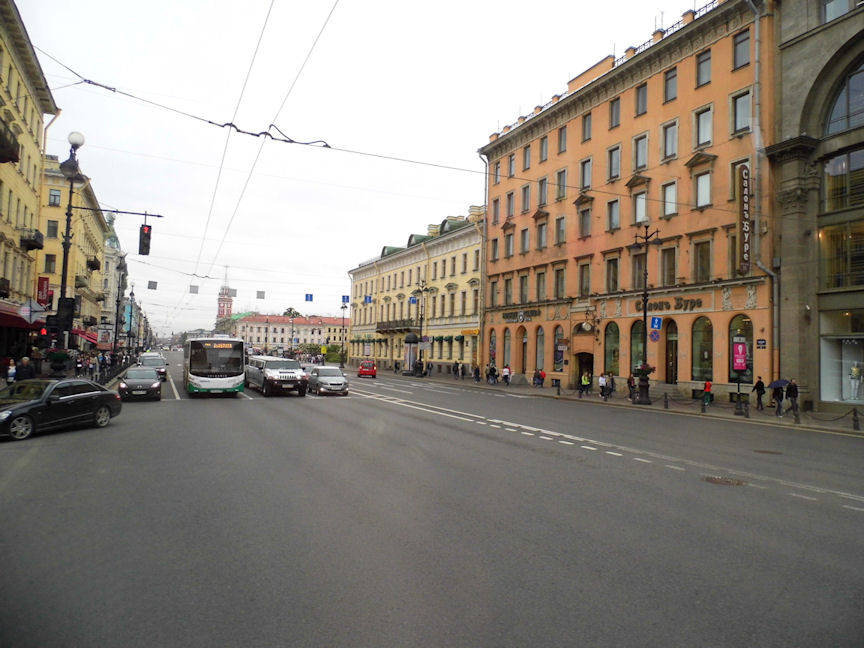
Nevsky Prospekt, St. Petersburg
A
brief glimpse of the Bronze Horseman statue of Peter the
Great – one of the few icons of the City I didn’t
get to see properly – and
then we were back at the Ship.

The Bronze Horseman, St. Petersburg
It
had been a long and tiring day, but we were very
satisfied. St. Petersburg had lived up to its splendid reputation.
Surprisingly, tomorrow, the best was yet to come.
_________________
After
the previous day’s whistle stop tour of St. Petersburg
it seemed unlikely that today might better it. The title of the tour
was St.
Petersburg Cathedrals – and it seemed quite a small scale
concept. Only three
Cathedrals would be visited – St. Isaac’s, Spilled
Blood and St. Nicholas. Even
the Kazan Cathedral on Nevsky Prospekt was not to be included.
However,
this turned out to be entirely wrong. This day was
at least the equal to the previous one. We were all kitted out with a
little
radio earpiece – this was a great innovation and allowed our
guide to continue
to guide us both inside and outside the coach.
We
began at St.
Isaac’s Cathedral
– the massive monolithic
slab of a building the Golden Dome of which dominates many views of the
City.
We arrived early and – in true Russian style – we
were not going to go inside
any earlier than we had booked to do. So we had to wait outside, much
to the
ire of some of the tour group, whilst our poor put-upon guide tried to
negotiate the un-negotiable with the guards on the gate.
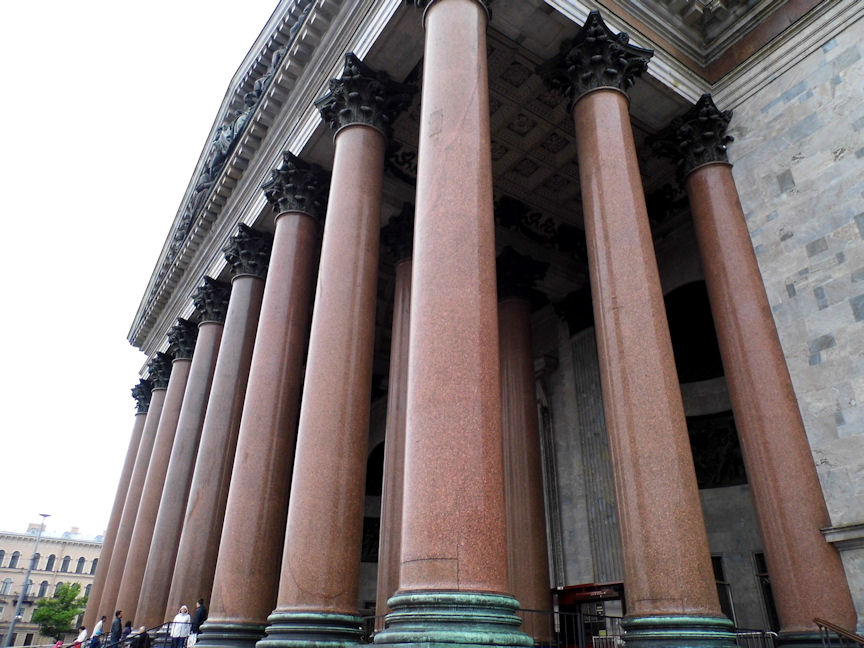
Portico of St. Isaac's Cathedral, St. Petersburg
When
you are this close to the Cathedral the scale of the
place begins to sink in. Those red columns are solid lumps of marble,
each one
weighing around 114 tons – there are over 100 of them. The
massive bronze doors
are so big that each panel weighs 10 tons.

Waiting to enter St. Isaac's Cathedral, St. Petersburg
The
less amenable members of our tour were starting to get
decidedly whingy by the time we got our tickets and filed through the
turnstiles.
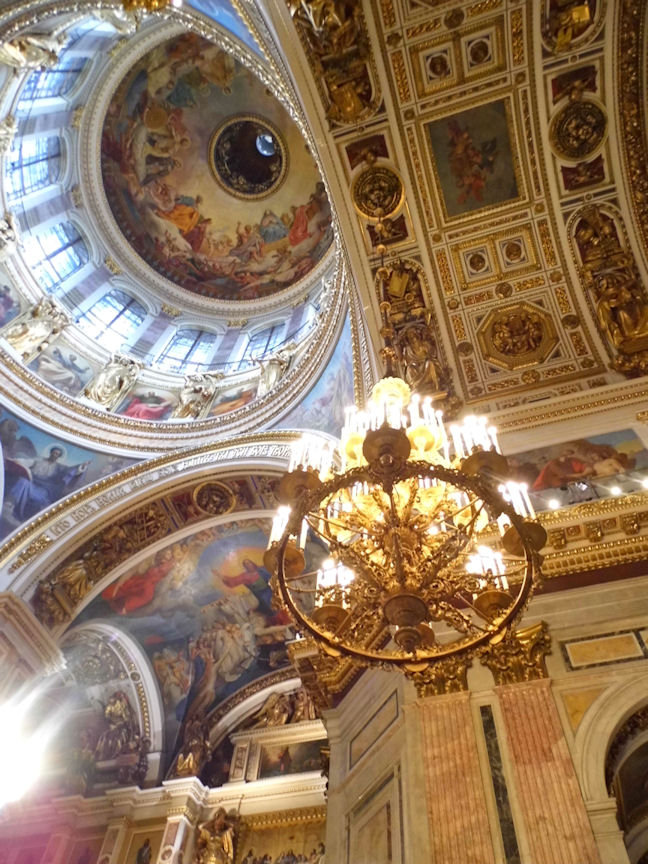
Interior of St. Isaac's Cathedral, St. Petersburg
Once
inside the Cathedral you are absolutely blown away by
the sheer size, colour and elaborate spectacle of the place. It is
possible to
describe it all in detail, but description does not provide the sense
of awe
and wonder that standing amongst all the glittering decoration gives.

Another view inside St. Isaac's Cathedral, St. Petersburg
For
instance, it could be reported that the iconostasis has
columns of pure malachite and lapis lazuli, that the screen is dotted
with
semi-precious stones and silver and gold. But actually, just look at it
– it is
a thing of beauty that transcends all descriptions and all religious
sensibilities.
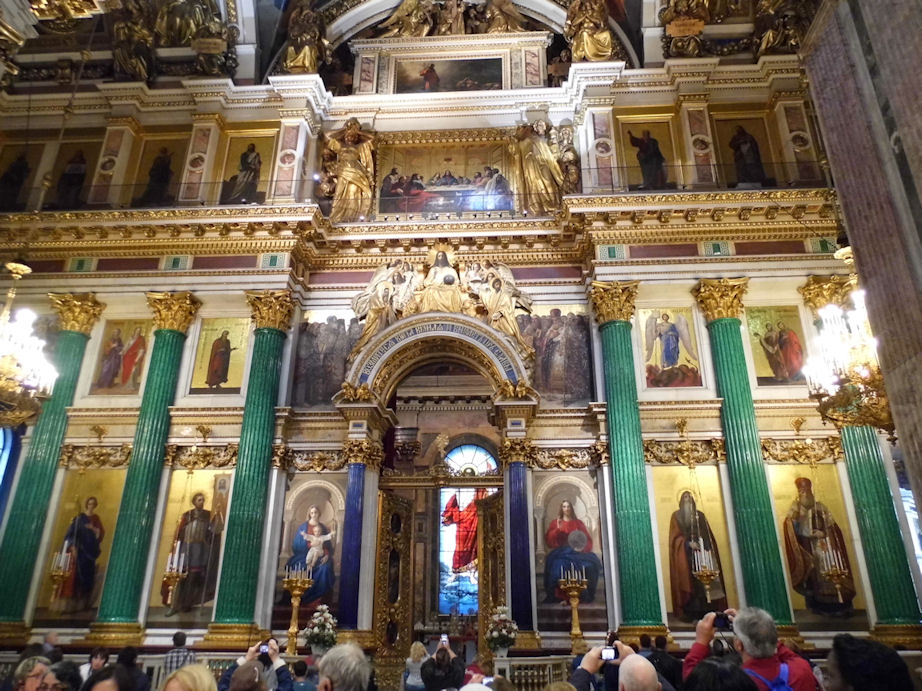
Iconostasis of St. Isaac's Cathedral, St. Petersburg
The
longer you stay inside the Cathedral, the more you see –
the dove at the top of the Dome; the models of the four successive
churches on
the site; spectacular mosaics and paintings everywhere.

Looking up at the Dove in the Dome - St. Isaac's Cathedral, St. Petersburg
Colour
and sparkling metal just assail you from all angles,
it is truly dizzying and I think is probably the most spectacular
church
interior I’d ever seen.
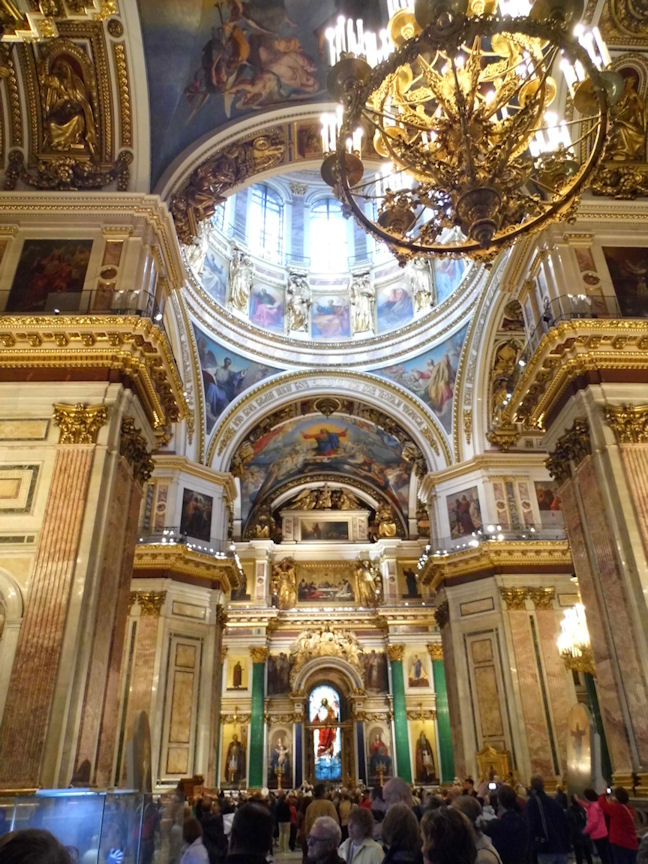
Another view of the interior of St. Isaac's Cathedral, St. Petersburg
When
we emerged blinking, back into the pallid light on a
day that so far had managed not to rain on us, we were all stunned into
silence. The exterior of the Cathedral had given no clue as to what we
were
going to encounter inside. As we drove away we barely heard our
guide’s words
telling us that there were bullet holes in the exterior from the
Revolution.
As
we headed for the next stop I finally got a view of the
front of the Winter Palace and Hermitage with its massive column. It
was brief
and fleeting but at least I got to see the front of the building for a
few
seconds.

The Hermitage/Winter Palace, St. Petersburg
And
then we were back on the trail of Cathedrals again. We
briefly stopped by the Field of Mars – once a
soldiers’ training ground and now
a public park – to take pictures of our next visit viewed
across the field. Our
guide said it was the only way to get a good view of the Cathedral as
it was
meant to be viewed, from afar, and she was probably right. Our next
stop was
the Cathedral
on the Spilled Blood.
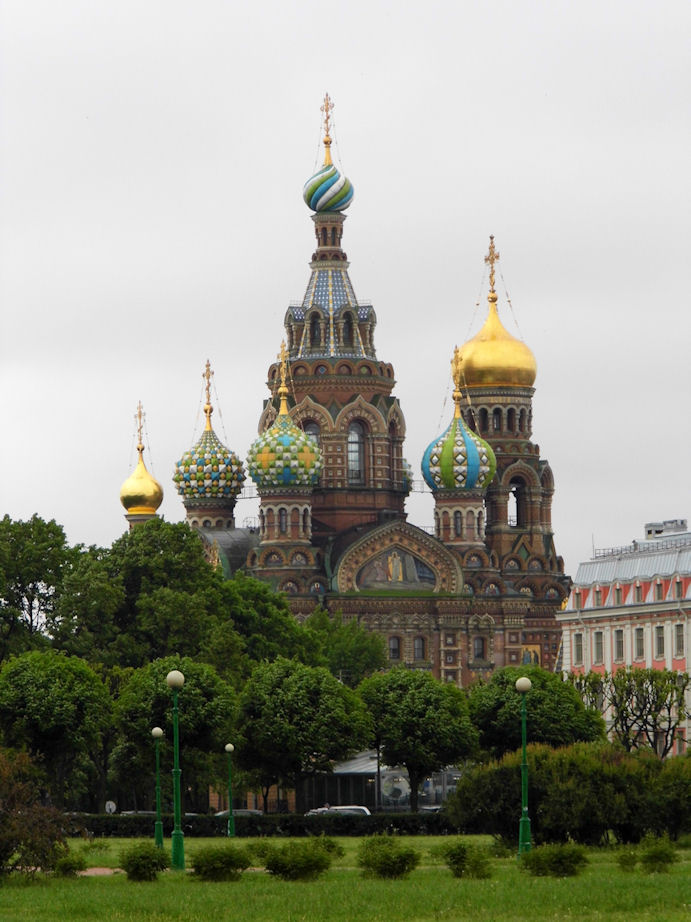
Cathedral on the Spilled Blood from the Field of Mars, St. Petersburg
It
took our poor coach driver a few attempts to negotiate
the melee of coaches, cars and tourists that were thronging around the
Cathedral on this day. Eventually we all just jumped off and stood in
front of
the Cathedral in awe. Today was brighter than yesterday and the colours
and
gold on the domes and cupolas more vivid still.

Cathedral on the Spilled Blood, St. Petersburg

The Domes of St. Petersburg!
If
I had thought that the inside of St. Isaac’s Cathedral
had been elaborate and colourful it was nothing compared to here.

Interior of the Cathedral on the Spilled Blood, St. Petersburg
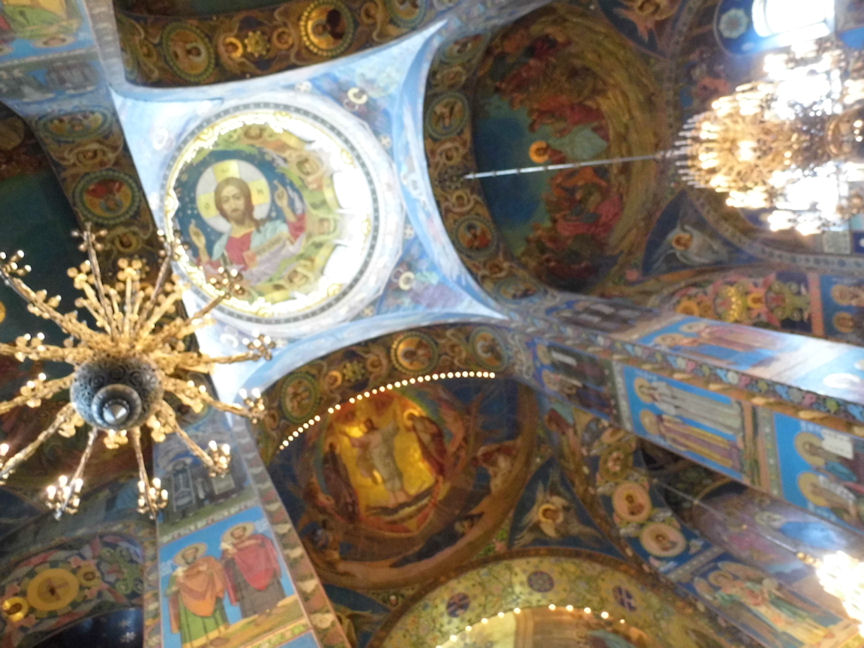
Another view of the dazzling interior of the Cathedral on the Spilled Blood, St. Petersburg
Every
inch of space was covered in mosaic – apparently some
7,500 square metres; a record apparently only broken by the Roman
Catholic
Cathedral in St. Louis, Missouri. It is hard to believe that for a good
half of
its existence this amazing space was used as a storehouse.
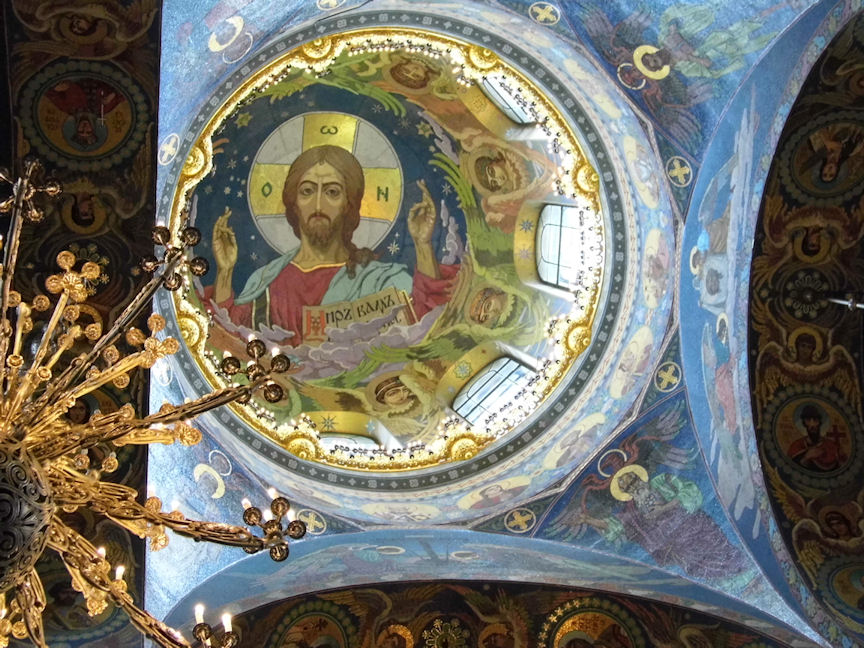
Close up of one of the dome interiors, Cathedral on the Spilled Blood, St. Petersburg
The
Cathedral was built on the spot where Emperor Alexander
II was assassinated in 1881. It was not opened until 1907 and had only
been in
existence ten short years when the Russian Revolution arrived and it
ceased to
function as a church. Early on the Bolsheviks had wanted to destroy the
Cathedral completely – not only did it represent the religion
they despised,
but it was a monument to a member of the Royal family to whom they were
just
about to put an abrupt end.
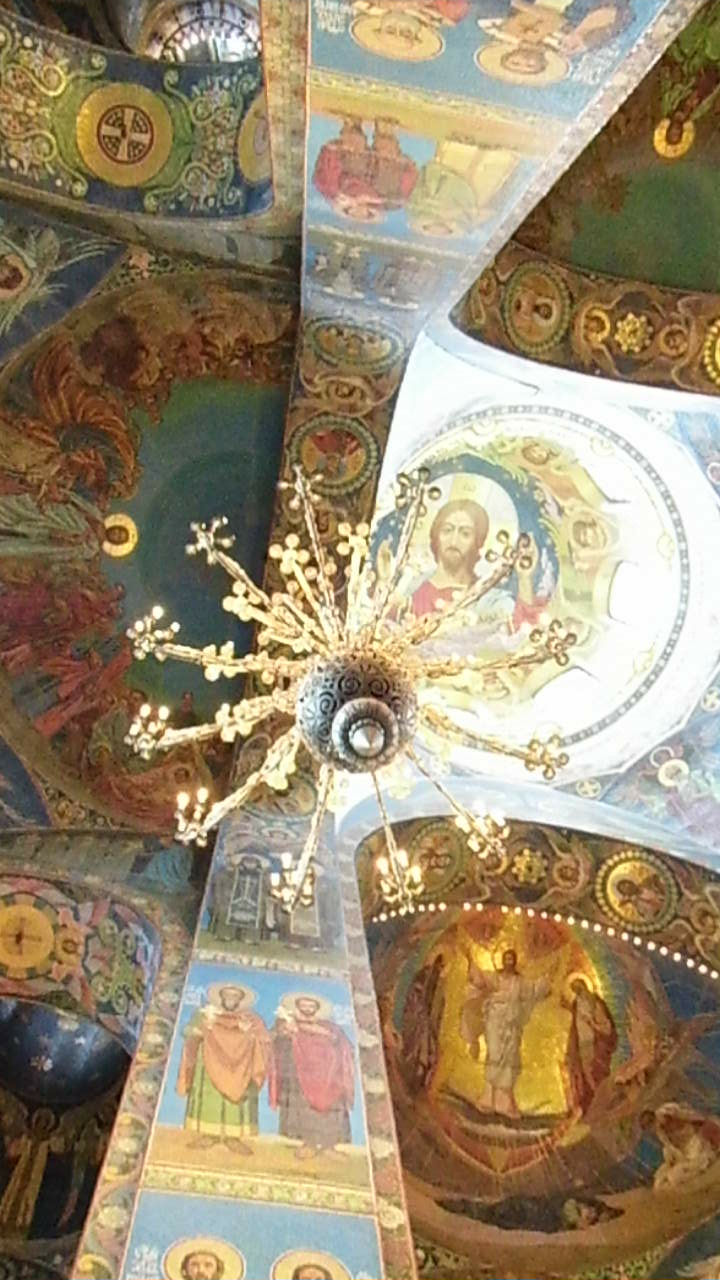
Another view of the interior of the Cathedral on the Spilled Blood, St. Petersburg
It
only survived when someone pointed out that large
buildings were at a premium. So it became a warehouse. During World War
II the
Cathedral was used as a morgue and then it became a warehouse for
vegetables,
gaining it the temporary name “Church of the Saviour on the
Potatoes”. For a
brief while it became a museum dedicated not to Alexander, but to the
movement
which assassinated him – but Stalin, who was rather paranoid
about
assassination himself – closed it and the Cathedral then
remained abandoned
until restoration work began in 1970.
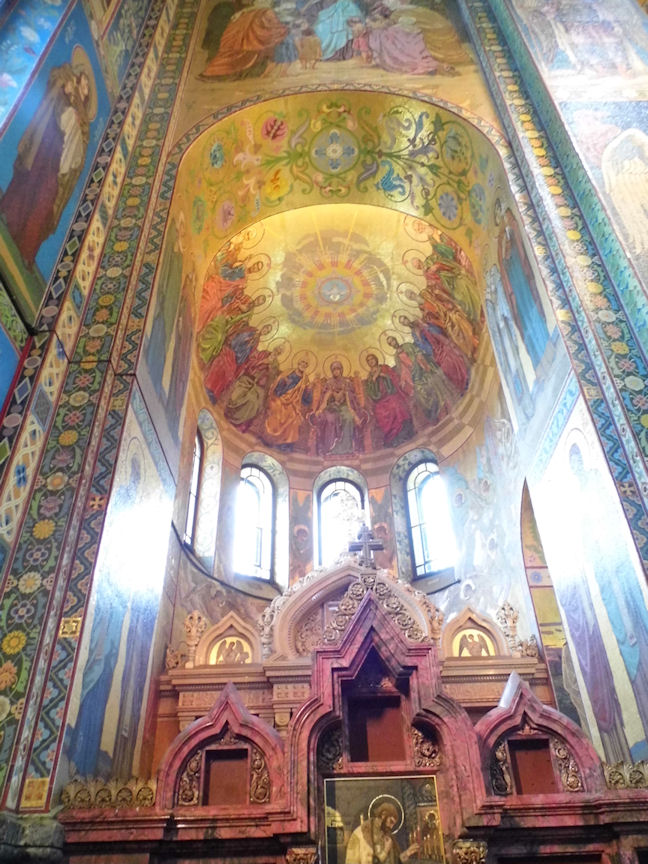
The Iconostasis, Cathedral on the Spilled Blood, St. Petersburg
It
took 27 long years for work to be completed and the
Cathedral finally re-opened as a museum in 1997 by which time the
Soviet Union
was gone. In all its life the Cathedral only operated as a church for
around 10
years.

Closer view of the Iconostasis, Cathedral on the Spilled Blood, St. Petersburg
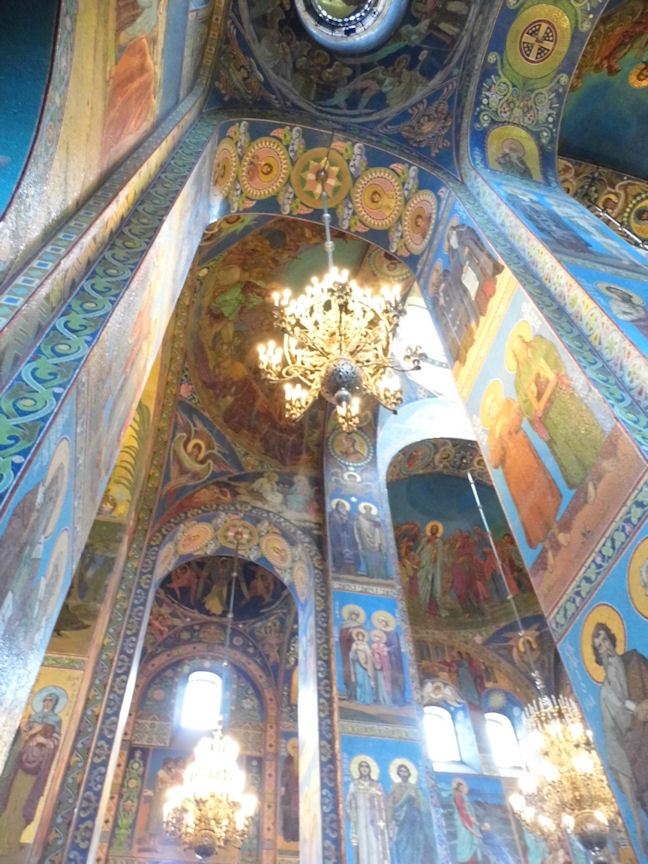
A final view inside the Cathedral on the Spilled Blood, St. Petersburg
At the
back of the Cathedral stands the Catherine Canal, one
of the elegant canals which cross-cross this City, and a nice park
which we didn’t
have time to explore stretches to one side of the Cathedral.
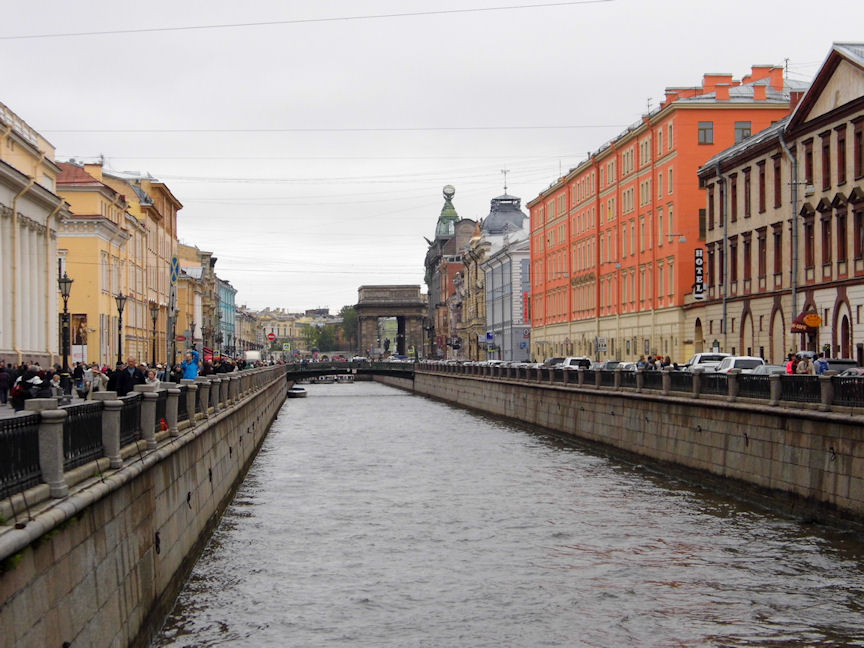
Catherine Canal, St. Petersburg

Happy Andrew in St. Petersburg
We had
a little time to explore the rear of the church
before heading back to the bus once more.
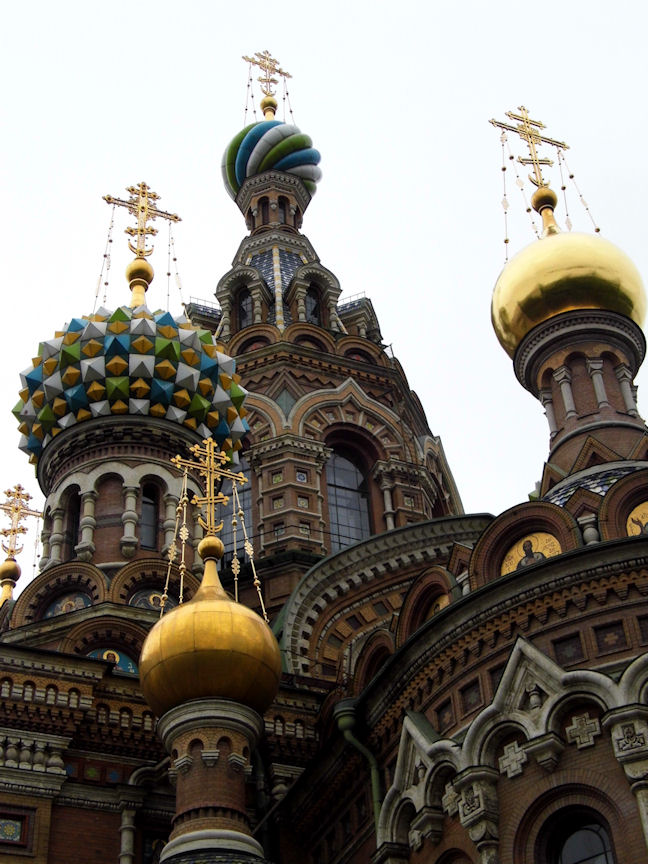
Final view of the Cathedral on the Spilled Blood, St. Petersburg
Off we
went once more crossing the Blue Bridge over the
Moika River which is apparently the widest bridge in St. Petersburg
(and some
claim the world).

Crossing the Blue Bridge, St. Petersburg
From
here we drove to the only working Cathedral of our tour
– St.
Nicholas’s Cathedral.

St. Nicholas' Naval Cathedral, St. Petersburg
The
Cathedral which dates to the 1750s is particularly
connected to the Navy and has a number of monuments to the service.
Although
not obvious it is actually two churches in one; on the ground floor St.
Nicholas’s Church which has regular services and on the first
floor the Epiphany
Church which is used for ceremonial services.

St. Nicholas' Naval Cathedral, St. Petersburg
Outside
is a fine bell tower built a few years after the
main body of the Cathedral. We weren’t allowed to take
pictures inside the
Cathedral which was, compared to our previous two, fairly dark and
unspectacular, but we were allowed to light a candle before departing.

Bell Tower of St. Nicholas' Naval Cathedral, St. Petersburg
As
we
left the area of the Cathedral – and indeed left St.
Petersburg – we crossed over the Green Bridge, also on the
Moika River. Just
down river from here is the Yusupov Palace (the building with the
bright yellow
exterior in the picture) where Rasputin met his end – yet
another of the many
historic turning points that happened in St. Petersburg – a
City which lived up
to its reputation as one of the great destinations of the World.
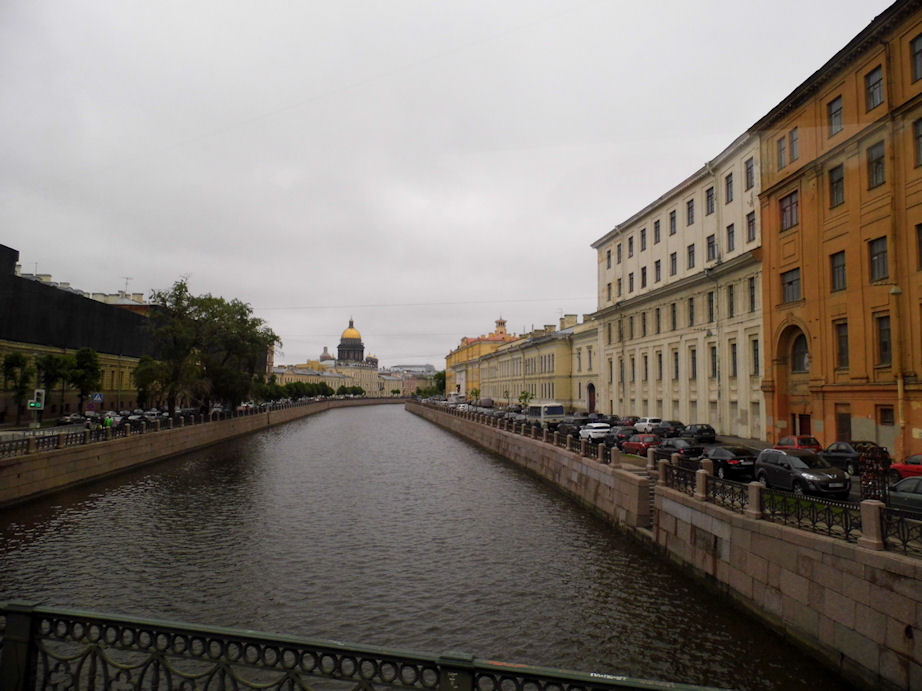
Crossing the Green Bridge, St. Petersburg
Next
stop was Tallinn
in Estonia.
GO
TO
RUSSIA PAGE ONE


Back
to Eastern Europe
©
Text copyright - Raving Loony Productions and Andrew J. Müller
© Photos and Artwork - Andrew J. and Jacqui
Müller
© Web Design and Layout - Andrew J. Müller
2023


